One assessment, before the decision
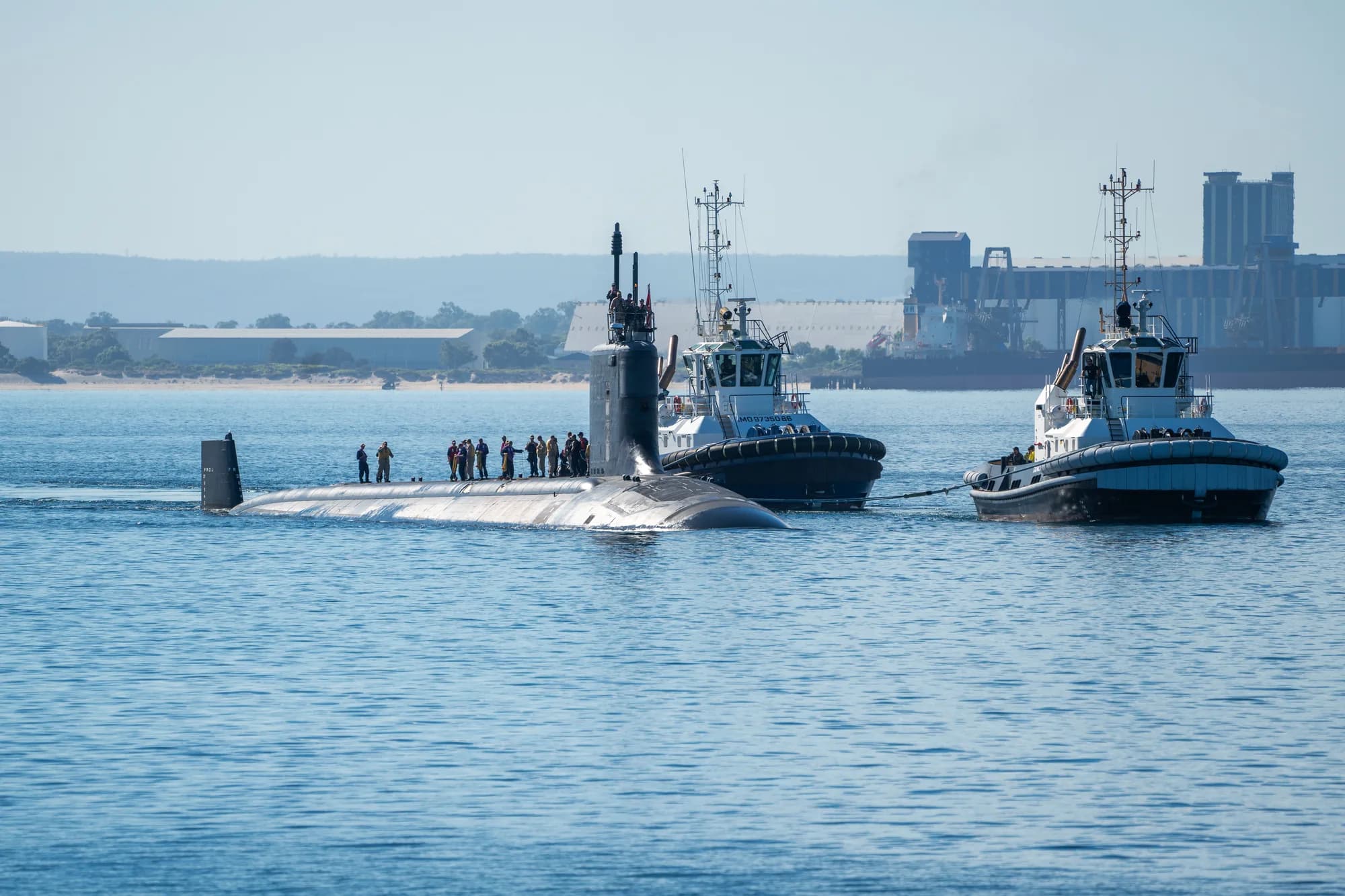
Westport’s potential interactions with AUKUS operations, and with Western Australia’s freight supply chain, warrant a United States security risk assessment conducted in Australia. This page explains what that assessment should examine and how to ask Congress to authorize it through the National Defense Authorization Act (NDAA).
The ask
We call on the United States to conduct a security risk assessment examining the proposed Westport container port and its potential interactions with AUKUS operations in Cockburn Sound, Western Australia. The assessment should identify and evaluate risks to submarine movements, naval operations, commercial freight traffic in Western Australia and security in Cockburn Sound to inform decisions about the project.
This is not about whether you support AUKUS. Moving all of Western Australia's container freight into a single automated port across the water from HMAS Stirling puts the state's supply chain and the submarine program in the same few miles of water, and no risk assessment of that has been published.
What the risk assessment should examine
The campaign is asking Congress to authorize a National Defense Authorization Act risk assessment of the security risks AUKUS faces from the Westport automated port. These are the risks it should identify, each set out in full on The Threat.
One narrow way in and out
Cockburn Sound has a single narrow navigable entrance, used by submarines and commercial shipping alike. One grounding there would trap the submarines and cut the state's supply chain at the same time.
Two routes that cross
The shipping channel to the new terminal crosses the route submarines take between HMAS Stirling and their maintenance facility at Henderson. Traffic through that water is projected to more than double.
Who is on the water
Australia has fifteen Australian-flagged commercial vessels over 2,000 tons. Virtually all of the commercial traffic in the sound would be foreign-flagged, and no screening plan for those vessels has been published.
All the freight in one port
Westport would concentrate all of Western Australia's container freight into one port at Kwinana, under four miles from HMAS Stirling. The state's economic and military assets would overlap in the same water.
Westport and the risk assessment: What to raise with Congress
Five points, each of which can be checked against a published document on The Evidence.
The base is an American investment
HMAS Stirling in Western Australia is where United States Virginia-class submarines will rotate under AUKUS. American money, American infrastructure spending, and American crews are going into that base.
The port decision was made before AUKUS existed
Westport became Western Australian state policy before the AUKUS agreement was announced in September 2021. Nothing in its design accounted for allied nuclear submarines, because at the time there were none.
The two would share one channel, and then cross paths inside it
Cockburn Sound has a single narrow navigable entrance, and submarine movements and commercial container movements would use the same confined water. Inside the sound, the shipping channel to the new terminal crosses the route submarines take between HMAS Stirling and their maintenance facility at Henderson. Traffic there is projected to more than double.
No published risk assessment covers the combination
The public record contains no risk assessment of the relocation conducted after AUKUS, no threat assessment on weaponised merchant shipping near the base, and no published screening plan for foreign-flagged vessels entering the sound.
This is not about whether you support AUKUS
It is about whether the billions being spent on the submarine program are put at risk by a port that cannot be undone. Westport would move all of Western Australia's container freight into one automated port across the water from HMAS Stirling, so the state's supply chain and the submarines would share the same few miles of water.
Message your representative or senator
Ask your representative or senators to support a National Defense Authorization Act risk assessment, conducted in Australia, of Westport’s potential interactions with AUKUS operations and with Western Australia’s freight supply chain, and congressional review of its findings.
Find your representative
Enter your ZIP code on house.gov to reach your member of the House and their contact form.
Contact your senators
Every senator’s office, web form, and phone number, listed by state on senate.gov.
A draft you can edit
Offices weigh a message in a constituent’s own words far more heavily than an identical one arriving a thousand times. Change it, cut it, or use it as notes for a phone call.
Dear [Representative or Senator],

I am writing about the security of United States nuclear submarines based at HMAS Stirling in Western Australia under AUKUS.

The Western Australian government plans to move the state's container terminal to Kwinana, about 3.7 miles across Cockburn Sound from that base. The sound has one narrow navigable entrance, used by submarines and commercial shipping alike, and the shipping channel to the proposed terminal crosses the route submarines take between the base and their maintenance facility at Henderson. Almost all of that commercial traffic is foreign flagged.

Westport would also move all of Western Australia's container freight into that one port, so the state's supply chain and the submarine program would depend on the same water.

The project was made state policy before AUKUS existed, and no risk assessment of the relocation conducted since has been published.

This is not about whether you support AUKUS. It is about whether the billions being spent on it are put at risk by a port that cannot be undone. I am asking you to support a National Defense Authorization Act risk assessment, conducted in Australia, examining the proposed Westport container port and its potential interactions with AUKUS operations and Western Australia's freight supply chain.

The published analysis is at westportthreatensaukus.org, a campaign sponsored by the Maritime Union of Australia, WA Branch.

Sincerely,
[Your name and address]
Contact the campaign
For congressional staff, policy researchers, and anyone who wants the underlying documents. Journalists on deadline should use the press page instead.
Send it on
This campaign reaches American policymakers through people who forward it. Sharing the ask is the most useful thing most readers can do.
Share the ask
Help this reach more people who can act on it.