This is a hypothetical scenario
Nothing described below has occurred. It is a constructed illustration of what the published risk assessment describes, written so the consequences of the Westport siting decision can be read rather than inferred from a list of distances. The factual basis for each element is set out on The Threat and sourced on The Evidence.
Why a scenario at all
Distances and traffic counts describe a situation accurately and persuade almost nobody. 3.7 miles is a number. A container ship at anchor within sight of a submarine berth, in a channel with one way in and one way out, is a picture, and the picture is what the risk actually looks like from the water.
The narrative below was supplied by the campaign’s sponsor and edited for publication here. It is fiction. No vessel, operator, flag state, or country in it is real or intended, and it is presented as a scenario, clearly and permanently labeled as such, because presenting it any other way would be dishonest and would give anyone opposing this campaign an easy reason to dismiss everything else on this site.
The scenario
A hypothetical scenario
Southern Channel
A hypothetical, in seven parts, of what a shared channel makes possible. No vessel, operator, or country in it is real, and nothing in it has happened.
Part one: the arrival
The ship crossed the continental shelf on a Tuesday, her transponder reporting precisely on schedule. She was, by every official measure, unremarkable: a forty thousand ton container vessel inbound to Kwinana with a manifest of agricultural equipment, resin pellets, and three hundred and twelve boxes catalogued simply as industrial components. She had made the run four times in the previous eighteen months. The port authority knew her silhouette. The pilots who took her through the outer channel knew the particular hum of her bow thrusters. She was, as one port operations supervisor put it to a colleague, part of the furniture.
That was the intention.
Her master stood on the bridge wing and watched Garden Island resolve out of the southern haze: low, scrubby, crowned by radio masts and the pale geometry of maintenance sheds. At that distance, in that light, the naval base on the western shore was barely a suggestion of jetties and hard standings. He did not need to see it clearly. He had the charts, and the charts were public.
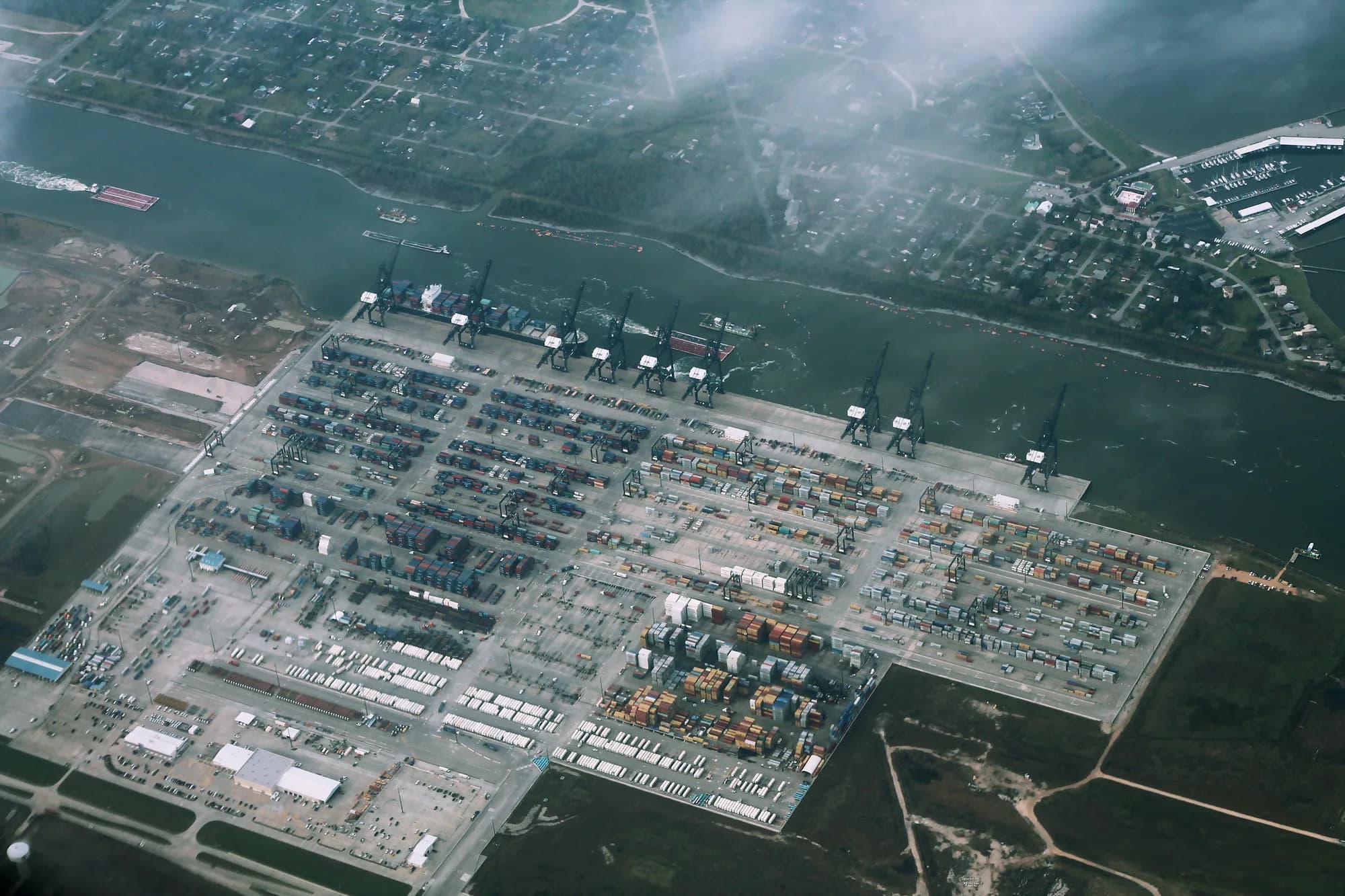
Cockburn Sound was a problem that had been in plain sight for thirty years. Garden Island forms its western side. Shallow water closes it to the south. There is one navigable entrance at the northern end, groomed and buoyed and surveyed to take vessels of increasing draught, and that entrance is everything. Whatever comes in through it comes in together: the bulk carriers, the car carriers stacked like white wedding cakes, the container ships, and, once the port relocation was complete, the submarines.
The decision to move the container terminal south from Fremantle to Kwinana had been debated, challenged, examined in committee, and approved. The new port was automated, its human workforce a skeleton of supervisors and maintenance technicians, and it was sited, its proponents argued, to handle decades of growth in container volumes. That it put the densest commercial shipping lane in the state directly across the approach corridor to the submarine base had been raised, formally and with some urgency, by a small group of retired officers whose warnings were heard, catalogued, and somewhere between a state transport ministry and a federal cabinet quietly shelved.
The sound was now shared. That was the fact that mattered.
The base occupied the southern end of Garden Island, reached from the mainland by a single causeway: one road, one bridge, one access point for the whole facility. The causeway had been designed in an era when the base hosted conventional submarines and the threat environment was largely theoretical. Now the base was being expanded at extraordinary cost, with new deep water berths and new maintenance complexes, to serve as the forward hub for allied submarine rotations. The construction was behind schedule, over budget, and drawing on the same skilled labour and the same procurement chains as the port.
One officer had the unenviable distinction of understanding both projects at once. Commander Havelock had spent fourteen months on the alliance implementation staff in Canberra before requesting a posting back to the base, in writing, with an appendix. The appendix ran to eleven pages and was classified. Its conclusion was not subtle.
“The shared channel arrangement creates a persistent, low cost collection opportunity that no amount of vessel screening will fully neutralise,” she had written. “We are, in effect, constructing a grandstand for our adversaries and then selling them season tickets.”
The appendix was also shelved.
Part two: what the ship left behind
On her third call at Kwinana, the ship lingered.
This was unremarkable in itself. Vessels wait in the outer roads all the time, for weather, for a berth, for congestion to clear. She anchored two nautical miles north northwest of the main buoy line for thirty one hours, well inside the approaches to the sound, and reported a minor engine fault. The fault was repaired. She proceeded to berth, discharged, and sailed.
What no one observed, because no one was looking, was that during those thirty one hours a series of small waterproof canisters had been fixed to the keel frames of the outer channel's navigation buoys. The canisters were not explosive. They were acoustic. Each held a sensor array sensitive enough to record the harmonic signature of a submarine's propulsion: the particular combination of shaft speed, blade geometry, and cooling flow that, to the right algorithm, is as distinctive as a fingerprint.
That was not the operation. That was the preparation.
The operation came six weeks later, when a submarine transited the northern channel at 0340 on a Wednesday morning. By the time she reached the turning basin off the new deep water berth, her acoustic signature had been recorded at four separate points along the channel. The data was compressed, encrypted, and uplinked on a schedule so routine that it looked, to anyone who might have been watching, exactly like a bulk weather telemetry packet from a buoy maintenance system.
The ship was two days out of port by then, heading northwest.
Havelock learned about the buoys four months later, when a maintenance crew found that one canister had developed a seal failure and was putting a faint interference pattern on channel seventeen. The buoy was replaced. A dive team was sent to inspect the others, and found all four inside a week.
By then there were eleven.
She sat in a secure briefing room and listened to an intelligence assessment officer work through the findings with the careful neutrality of a man delivering a prognosis he personally found distressing. The canisters were sophisticated. The materials were consistent with hardware produced by a state level industrial actor. The data capacity suggested months of collection. The positioning, always on the outer approaches, never inside the security perimeter, never close enough to trip the existing detection systems, indicated detailed prior knowledge of the base's sensor architecture.
“This is not opportunistic collection,” he said. “This is a systematic effort to build a movement pattern database for every submarine transiting this channel.”
Havelock thought about her eleven pages. “How many naval transits since the port opened?”
He checked his notes. “Thirty seven. Ours, plus six allied rotational visits.”
“So they have thirty seven acoustic profiles.”
“Potentially.”
Part three: the weight of the channel
Further surveys followed. Divers worked the northern channel systematically, inspecting navigation aids, mooring buoys, and the underside of the channel marker system, and found three more canisters, all passive, all inert, all set with the same deliberate geometry as the originals.
None had been placed inside the formal security perimeter. All had been placed in the long, legally ambiguous approaches: the zone where commercial vessels wait, where pilots board, where the base's authority technically ends and the port authority's technically begins.
The gap between those two jurisdictions, Havelock reflected, was not an accident of the operation. Someone had studied the boundary. Someone had understood that the most useful place to be is not inside the fence but in the channel just before it, in the zone of shared use, divided authority, and mutual assumption that the other party is responsible.
The port relocation had made that zone permanent, and vast, and busy.
The second problem needed no adversary at all.
A fuel tanker on a seventeen day rotation from an Asian refining terminal to the Kwinana fuel jetty was not a vessel anyone thought about often. She carried refined product sufficient for a few days of the state's total consumption, and she was one of a handful in the rotation. Between them they sustained a city of two million people and, incidentally, the logistics tail of an entire naval base.
The state had no refineries. It had no reserves beyond the stock commercial importers are obliged to hold. It had one channel through which all of that fuel arrived.
This was the detail that kept a very small number of people awake at unusual hours.
A retired warrant officer named Terrill had spent three years after his naval career consulting for a risk advisory firm contracted to model exactly this. His report used the grounding of a container ship in a New Zealand harbour as its case study: a vessel that blocked navigation, and took weeks before the first box could be lifted off. The northern channel now took vessels more than twice that hull's displacement.
Terrill modelled a grounding, deliberate or otherwise, in the narrowest section of the northern approach. His findings were concise. Clearance would take six weeks at best. The state's fuel reserves would be gone inside five. The base would lose resupply entirely inside the same window, and anything berthed there would be effectively trapped.
He titled the section The Resilience Gap.
The report was received. It was noted. It was added to a growing archive of similar assessments, each catalogued and cross referenced and assigned a risk rating that somehow never translated into a change in policy. The port had cleared its point of no return by the time the report was filed. The infrastructure was built. The channel was shared. The future was a fact.
The first sign that something beyond acoustic collection was underway came on a grey Thursday in late winter, when a dive team conducting a pre deployment inspection found a small disc shaped object adhered to a submarine's hull near the aft ballast keel. It was not explosive. That was established quickly, with considerable care, and with a residual uncertainty that did not entirely dissipate even after the disposal team had finished.
What it was, in the language of the technical report, was a passive monitoring device consistent with close proximity collection. What it was, in plainer terms, was evidence that something had been alongside that submarine at some point during her last three weeks in port.
The waterside perimeter was examined. The access logs were reviewed. The movement records of every vessel that had operated inside the sound during the relevant window were requested from the port authority. There had been forty seven commercial transits in three weeks. Twenty nine were container ships.
One of them had been in port for thirty six hours, ten days before the device was found.
Part four: state and federal
The meeting in Canberra lasted four hours and twenty minutes and produced nothing.
That was not unusual. What was unusual was who attended: a deputy secretary of the defence department, the head of the domestic intelligence agency, the chief of navy, a minister's chief of staff, and three officials from the American embassy whose roles were described only in general terms. They worked through the intelligence picture with the systematic thoroughness of people who already knew what it meant and were, for institutional and political reasons, reluctant to say so directly.
The deputy secretary opened by noting that the government's position on the port remained unchanged. The investment was committed. The project was operational. The economic case was consistent with national objectives.
The assessment officer, who had not slept properly in six weeks, presented his findings without editorialising. The acoustic collection. The hull device. The pattern of vessel movements. The correlation between one ship's port calls and each confirmed event.
The intelligence chief added, choosing his words with surgical precision, that his organisation had accumulated corroborating material over fourteen months broadly consistent with the picture just presented, and that the actor appeared to be operating with a degree of patience and institutional support indicating a program rather than an exercise.
There was a silence.
“What we need to avoid,” the chief of staff said finally, “is any characterisation of this as a failure of the port decision. The project went through the appropriate approval processes. The security advice available at the time …”
“The security advice available at the time was quite explicit,” Havelock said. She had not been invited to the meeting. She had been brought in as a briefing officer, which meant she was technically present to answer questions rather than to make arguments. She made the argument anyway. “There are several formal assessments in the record. They were not acted upon.”
The chief of staff looked at her with the expression of a man deciding whether to be angry.
“Commander,” the deputy secretary said, not unkindly, “the question before us is what we do now.”
What they did now, it emerged, was nothing that would require a public statement.
Part five: the question the second device asked
Across the Pacific the reaction was less measured.
A senator who had spent eleven years on the armed services committee, and considered himself a careful man, had not been careful about this. He had received an informal briefing at a function in Washington, arranged through a mutual contact, and it caused him to call an emergency meeting of his subcommittee staff the following morning.
“Let me understand this correctly,” he said. “We have committed billions of dollars to a submarine base in Western Australia. That base shares its only access channel with commercial shipping that includes vessels flagged to jurisdictions we have formal intelligence concerns about. And there are now confirmed collection events, plural, against our submarines at that base.”
His senior staffer nodded carefully. “That is a fair summary.”
“And the position is that this is manageable and the port decision stands.”
“The public position is that security arrangements are being reviewed and strengthened.”
He sat back. “We told them. In writing, through proper channels, that this arrangement was inconsistent with our baseline basing standards. We told them a year before the port opened. And now our submarines are being tracked.”
“Senator, there is a broader issue. The collection events suggest the actor has been building a capability database. Movement patterns, transit schedules, acoustic profiles. That is not tactical intelligence. That is the foundation for something operational.”
He looked at her. “You are telling me they are not just watching. They are preparing.”
“That is one interpretation.”
The second hull device was found on an allied submarine three weeks into a rotational port visit. This one was more sophisticated. A technical team spent nine days analysing it and produced a classified report shared with partner governments. The report was careful, as such reports are. It noted the device's capabilities, described the materials, assessed the likely collection window, and did not speculate, in the unclassified sections, about the identity of the actor. In the classified annex it did not need to.
The response from that partner government was immediate and private. The next rotational visit, it noted, was under review pending a satisfactory assessment of the security environment at the base. The review would be conducted jointly, and would take no fewer than six months.
The Americans were blunter. A senior submarine officer flew to Canberra without announcement and met the chief of navy and the deputy secretary for fifty minutes, with no ministerial staff in the room. He brought a four page document setting out, with the precision of a man who had spent his career operating nuclear submarines in contested water, the minimum security standards required for American personnel to operate from a forward base. It had been drafted in response to the situation at the base and did not mention the base by name.
The chief of navy read it in the room. “We built this to spec,” he said. “The base itself is …”
“The base is fine,” the American said. “The channel is not. And the channel is the base.”
After he left, the chief of navy sat in his office for a long time. On his desk was a copy of Havelock's eleven page appendix. He had found it in the archive three weeks earlier, after a subordinate mentioned it in passing, and he had read it twice.
He had circled the final sentence.
Part six: the hearing
The congressional hearing was formally titled Alliance Basing Credibility in the Indo Pacific. It was held on a Tuesday morning in a room with high ceilings and bad acoustics, and it was chaired with the controlled fury of a man who had been told to be careful and had decided, after considerable reflection, not to be.
The department witnesses were measured and professional and said very little of substance. The independent analysts were less measured. A retired three star with forty years in submarine operations told the committee, in language that left the transcript editors very little to work with, that the arrangement in the sound was structurally incompatible with the responsible deployment of American nuclear assets. A former intelligence official described the documented collection events as the most significant technical penetration of an allied basing arrangement in two decades.
The Australian ambassador watched from the gallery. His expression did not change. He had been given no warning.
The hearing was carried live by three Australian networks.
In Canberra, a statement was released before the session had ended, noting that the government remained fully committed to the partnership and that all security matters were being addressed through appropriate bilateral channels. It was issued at 11:47 at night, local time. It was, in its architecture and its timing, a document that managed to say nothing while appearing to say everything, and the press gallery dissected it for hours without finding any load bearing content.
The deeper problem was not what the government had said. It was what the hearing had revealed that could not be unsaid: that the warnings had existed, that they had been recorded, and that the decisions had been made anyway. The testimony was in the public domain, verbatim, and the combination of detail and authority it carried was not something either government could manage away with a well worded statement.
In Perth the state government's response was swift and categorical. It expressed confidence in the security arrangements at the base and noted that the port had been developed through rigorous consultation with federal defence authorities. The federal government issued a parallel statement expressing full commitment to the partnership and noting that security reviews were ongoing.
Both statements used the word robust three times.
Havelock read them on her phone in the car park of a shopping centre in Rockingham. She was on leave, partly because she had been advised to take it, and partly because she was no longer certain she could sit in meetings about this subject without violating the norms of professional behaviour she had spent a career maintaining.
She drove home and sat in her kitchen and thought about the eleven page appendix, and the four page appendix before it, and the Terrill report, and the assessment, and the quiet, systematic patience of whoever had spent eighteen months placing canisters along the northern channel.
She thought about the resilience gap. Weeks of fuel. Weeks to clear a wreck. She thought about what it would mean, not as a strategic abstraction but in plain material terms, if the channel were closed. The petrol stations. The hospitals. The emergency services. The submarines at their berths, going nowhere.
She thought about the fact that none of this was an accident, and that the people who could have prevented it had chosen, at each of the relevant decision points, to prioritise something else.
She did not cry. She was not that kind of officer. But she sat in her kitchen for a long time, and the light outside changed, and she did not move.
Part seven: withdrawal
The formal notification arrived through diplomatic channels on a Wednesday, in the measured language of treaty management. The United States government was, the note explained, conducting a comprehensive review of its forward basing posture in the Indo Pacific in light of operational security assessments. Pending the outcome, rotational submarine deployments to the facility would be suspended effective ninety days from the date of the notification, and all American personnel assigned there would be progressively repatriated to existing installations.
The review, the note added, would be completed within eighteen months.
No one with experience in these matters expected it to conclude favourably.
The trilateral framework, as a leaked working group summary put it, had not failed. It had been undermined by conditions that were known, documented, and not acted upon.
The other partner government, under domestic pressure of its own, announced two months later that its participation in the rotational program would be restructured to reflect the evolving security environment. The restructuring involved no submarines returning to the base for the foreseeable future.
The federal government, caught between a state government it could not override and an alliance it could no longer credibly sustain, announced a defence and infrastructure review expected to take two years. Port operations continued throughout, the container ships moving through the northern channel on their regular schedules, indifferent to the significance of the water they crossed.
The funding allocated for the next phase of submarine infrastructure, the deep maintenance facility, the hyperbaric treatment centre, the specialist training precinct, was not cancelled formally. It was paused pending strategic clarification. In a defence department, where such language has a well understood meaning, no one expected the pause to end.
Epilogue: what the sound remembered
The ship returned to Kwinana for the eighth time fourteen months after the hearing. Her transponder reported on schedule. Her manifest was unremarkable. The pilot who took her through the northern channel had done it many times and knew the particular hum of her bow thrusters, the way she settled slightly to port as she slowed for the turning basin.
The naval berths on Garden Island were quiet. The deep water wharf built at such expense to host the nuclear submarines of three nations was empty, its bollards weathering gently in the salt air. The security perimeter was still maintained, out of institutional habit and unresolved hope, but the facility had the quality of a house whose owners have moved away: everything in its place, nothing animated.
In the port operations centre on the mainland a supervisor watched the ship approach the berth on his screen and noted the time of arrival in his log. It was a routine entry. She was part of the furniture. She had always been part of the furniture.
That was the point.
Havelock had left the navy by then, which was not unusual for someone of her rank and tenure, and not entirely voluntary, which was also not unusual. She had taken a position with a maritime risk consultancy, where her expertise was valued in proportion to how directly it could be attached to a fee schedule. She wrote assessments. She briefed clients. She did not talk publicly about what she knew.
On the day the last American naval officer formally departed the base, she was at her desk when her phone buzzed with a news alert. She read the brief item, basing review concludes, no return to the facility under current security conditions, and set the phone face down and went to make coffee.
She had known this was coming for a long time. She had known it before the first canister was found, in the way that a structural engineer standing in a building that has not yet failed sometimes knows, with a certainty that has no formal name, that failure is already underway.
The warnings had been written. The appendices had been filed. The archive was complete and meticulous and thoroughly unacted upon.
She thought about the sound: the low scrub of Garden Island, the northern channel with its buoys, the singular geometry of a place that had been everything and was now, quietly and irreversibly, less than that.
She thought about what it costs to build something and then fail to protect it. Not in dollars. She knew the figures, and they were large and precise and ultimately beside the point. She thought about the cost in the older sense of the word: what you surrender, what you cannot get back, what the record will show you were warned about and chose, for reasons that seemed sufficient at the time, not to address.
The coffee machine finished. She poured a cup. She went back to her desk.
There was a new assessment to write.
Publication note
All characters, vessels, and incidents in this story are fictional. No vessel, operator, flag state, or country is named or intended. The strategic conditions it draws on, a shared maritime chokepoint, foreign flagged vessels in proximity to naval infrastructure, a fuel supply resilience gap, and alliance confidence, are drawn from published strategic risk material. No operational detail, technical specification, or non public information has been used or implied.
What the scenario is not
It is not a prediction, and it does not assert that any specific vessel, operator, or country intends anything. It is not evidence of a plot, and no part of this campaign claims to have found one.
It is an argument about siting. A base whose security depends on an adversary choosing not to exploit an opening is less secure than a base without the opening. Every published question about Westport comes back to that, and none of them has been answered on the record.
Share this page
Help this reach more people who can act on it.